Monday, August 26, 2019


How about a nap in a pig barn?

Betsy and Beulah, Wyatt's pigs, 2019
The pig barn at the Harford Fair exudes comfort.

At least it does if you've spent four hours walking the fairgrounds. Move over, Betsy and Beulah. Make way for my weary piggies.
Wyatt, Harford Fair, 2019

My grandsons, Wyatt and Mack, have been raising pigs and/or goats for about five years, so I make annual pilgrimages to the fair's pig barn to enjoy the fun of the show.

Pig barn living at the fair is not what I expected. My vision of pig barns is based solely on Charlotte's Web where sweet Charlotte goes to extreme lengths in her webs to keep her friend Wilbur from getting to the fair. Her attempts to derail Wilbur's trip to the fair certainly weren't because of the accommodations.

Sadee at the goat show, 2018
The 4-H children at the fair who maintain the stalls and their animals do an immaculate job. The floors are thick with fresh hay, shoveled out regularly. The bovines recline like hairy mountains, oblivious of the crowds about them, swishing their tails to ward off flies like fat dowagers on a Carolina veranda while emitting ear-splitting squeals if they happen to cross each other's personal space. The pens are even decorated with posters for the competition, bearing the name of the owner, the farm, the pigs' names, and the multi-colored ribbons indicating their prize position. Feng shui even in the pig pen. We congregate around the Gadsden Ridge Farm stall. It's family.

But the real fun is in the ring. The actual show is more interesting than most television sit-coms. The pigs have been hosed down and shined up for their appearance before the judges, and the kids, likewise, wear their best jeans, often a plaid shirt, and sometimes a pair of boots that cost more than a Weber grill.

And bling is the thing ... even in the pig barn. Many of the competitors, kids not pigs, wear wide Western belts embedded with turquoise, crystals, and colorful gems. Some wear flashy necklaces, drawing more attention to the showman than the pig, a good ploy if they have trouble controlling their wayward charges.

The plan is to walk your pig in a circle or a figure eight using a guide whip to gently tap the pig while simultaneously keeping your eyes on the judge with a smile on your face. Something like patting your head and rubbing your tummy ... not so easy. The judge floats around the ring with a clipboard giving points to the showman for poise, posture, control, and personality and to the pig for shoulder width, leg distance, back length, and butt configuration. Muscle vs. fat becomes an issue to which both the hogs and I can relate.

With strength and determination of their own, those pigs become a heavyweight challenge for the strongest-willed teenager. One pig heads for the exit shoot, another refuses to move, one skirts the edge declining to come out in the middle, another wants to run at break-neck speed ... anywhere but here. It's a comedy of errors, and glory goes to the kid who can hold the judge's eye, direct his/her pig, demonstrate control, and keep on smiling.

Considering the comfortable pens, the showy affair, and the bling, the Prodigal Son might never have returned home. His story, like the pigs, might have had a tragic ending.

But most of the hogs who enter the ring through those narrow gates are headed to the auction block by the end of the week to provide hundreds of pounds of chops, ribs, roasts, and bacon. And this would be the reason Charlotte sacrificed her life to save her friend Wilbur.

The pig analogy could also apply to us. Everything that looks good, feels comfortable, and shows well may not be the best thing for us.

"Enter through the narrow gate. For wide is the gate and broad is the road that leads to destruction, and many enter through it, but small is the gate and narrow the road that leads to life and only a few find it." 
Matthew 7:13-14

A sacrifice has been made for us as well. We don't have to be led by the trainer's whip. Unlike the pigs, we can make the choice to follow The Way, God's Way, and avoid destruction. 

The last thing we want to do is fall into lethargy and take a nap in the pig sty when the end looms.




Monday, July 29, 2019

Promises, Promises

"We promise a chicken in every pot and a car in every garage," Presidential campaign 1928.
"Mrs. Walczak, I promise to do all of my homework this quarter," A well-intentioned student.
"I can't promise I'll try, but I'll try to try," Bart Simpson.
Promises, promises.
Promises are only as good as the Promise Maker.

This weekend our family celebrated promises made and promises kept. 

The scene was Charleston, South Carolina, where the War Between the States began, and the North launched a campaign, promising freedom to African American slaves. Promise kept.

I think I would concur with the Marquis de Lafayette, "Charleston is one of the best built, handsomest, and most agreeable cities I have ever seen." A great place for exchanging wedding promises.

Michael and Shayna, July 21, 2019
Our entire clan gathered in Charleston to witness the exchanging of promises between my sister's daughter, Shayna, and her fiance, Michael. The four day action-packed destination wedding included a cruise of Charleston Harbor, yoga on the waterfront, golf, plantation tours, horse and buggy carriage rides, seafood dinners, time at Folly Beach, and a city-wide scavenger hunt when we searched out things like joggling boards and other wedding parties. (I did it all with the six grandkids, and I'm still recovering!)

Charleston ranks second to Las Vegas as destination wedding capital of the US. Who knew? Our hotel, the Belmond, and the city certainly know how to welcome brides, grooms, and their families.

The whirlwind ended on Sunday evening at the Rice Mill. We took our seats on the lenai in the southern heat beside a salt water marsh and oohed and aahed over our red-haired beauty, dressed in lace. The bridesmaid brunch, the late night parties, the packing and moving the family over 700 miles, everything built to a crescendo that night ... the exchanging of promises.

You've been to enough weddings. You know the promises:

 I promise to cherish and keep you ... 

  •  when things are great for us and even when the kids are a handful, the house is falling apart, or I lose my job. 
  • when we have a comfortable bank account, and we can pay our bills, and when we have nothing but the roof over our heads and a beat-up car. 
  •  if you are healthy or if you break your leg or have cancer, and I must care for you daily.
  •  when I don't like you sometimes because you have a few annoying habits. 
  • as my dearest relationship on earth until we are parted by death. 
  • And this is my solemn promise.

Last weekend Shayna and Michael made those promises to each other although not in quite those words. We all witnessed it. Promises are only as good as the Promise Makers, and Shay and Mike have the right stuff for promise keeping: strong moral fiber, impeccable character, and commitment to each other's well-being. They will work hard to keep their promises, no matter what life brings their way. So their journey begins.

But as an observer of the wedding guests, my joy didn't settle only on the two Promise Makers in front of the audience. Among the sons, sisters, brothers, and cousins in attendance, I saw a bevy of strong marriages, all cultivated by commitment to promises. Several couples had faced cancer and heart attacks. Some battled job and financial issues. Many either had run the gauntlet of parenthood or were deep in it. Some had second chances. Among the older guests were years of faithfulness. There was wedding happiness for the newlyweds, but abundant joy for those who had proven it could be done through the tests and trials of life. Promises can be kept.

The tone of the wedding? HOPEFUL.

Our "Me" culture leaves little room for keeping promises if those promises run counter to personal satisfaction and self-concern. Questions of integrity and character are moot in the face of "Do what makes you happy," despite the consequences to those around us, despite the promises we've made. The Almighty "I" becomes the key to decision-making. 

A key question facing individuals today is, "Are we willing to keep our promises?"

Our Charleston wedding, filled with promise keepers, was refreshing, hopeful. The future of our society is planted in the bedrock of such commitment and cultivated by mutual respect and integrity. It's a relationship choice that will make or break our characters, our families, our world.

Thankfully, we've been set a powerful example in our Promise-Keeping God who is faithful. He makes us a plethora of promises and always does what He says. Walking life with Him exudes confidence and strength because we know the One who has our backs will never turn His back on us.

"The Lord is trustworthy in all He promises and faithful in all He does." Psalm 145:13

Rhett Butler said of Charleston in Gone with the Wind, "I'm going back to dignity and grace. I'm going back to Charleston where I belong." 

And we long to go back to a world of dignity and grace ... where promises are kept. Thank you, Shayna and Michael, for a spectacular wedding weekend and for the reminder of hope and joy in promises kept.


Friday, June 28, 2019

Grabbing for the Brass Ring


"I want the white one," Sadee yelled as she headed toward a pony with a gold halter.

"I want one that goes up and down," Claire said as she climbed aboard a black beauty with teeth bared.

"I'm getting one on the edge because I want to grab for the rings!" Mack declared as he picked a noble-looking stallion.

We were on the Grand Carousel at Knoebels' Amusement Park in Elysburg, PA. 

The central attraction of our summer vacation for the last seven years has been a trip to Knoebels for several days of camping and riding. My six grandkids have grown up a bit each summer on the 1913 carousel, one of the largest in the world and voted #1 "Best of the Best" in amusement history by Golden Ticket Awards for the past 17 years. 

The children's all-day wrist bands allow limitless rides, but the rider gets off after each ride, stands back in line where there is time to survey the herd, and boards again to choose another from the stable of 63 handsome horses.

The Grand Carousel Organ sets the tone. The old pipe organ plays what has been called some of "the happiest music on earth," with clashing cymbals, beating drums, bells, and trumpets. Much of the music is from an era long before my grandchildren. It's Sousa and Goodman, not Gaga and Underwood.

Sadee on Knoebels' Carousel, Summer 2019
As they've grown and taken on amusement park sophistication, the older grandkids have skipped the Carousel until later in their day and headed, first of all, to the Phoenix and the Twister to get their fill of roller coaster terror. But there has been a steady stream of younger children in the family who head directly to the very center of the park and its piece de resistance, the park's Grand Dame, the Carousel. We've been to Disney World, and Walt certainly has created a massive entertainment kingdom, but the joy of Knoebel's Park and the Grand Carousel are magnets for us.

One thing always draws the older ones back to the Carousel after they get their fill of hair-raising coasters: grabbing the rings.

To grab the brass rings, they have to sit on the outside rim of the merry-go-round. When the ride begins, a metal arm starts to dispense brass rings. The rider hopes the rise and fall of his horse will coincide with reaching the ring dispenser. There's a significant physical stretch involved as they lean precipitously off their horses. Sometimes they can grab the rings, and sometimes they grab air. The game is to see who can grab the largest number of rings. I've given up the reach for rings ... too many variables that might leave me in an embarrassing position on the floor.

Every year when I choose my horse and begin the musical loops, I think about the metaphor of this classic amusement ride. For what rings am I reaching? Am I trying to give my life significance by grabbing for all kinds of rings? 

Grabbing the brass ring is a cultural goal in America. We are on our horses and striving - for a bigger house, a second house, money, possessions, vacations, wardrobes, "bucket-list" experiences. Success is gauged by the rings we have accumulated. Grab what you can while still riding high. Don't fall off the merry-go-round. Aim to get more rings than the other game players. 

Those rings we've grabbed - are they an indicator of our significance, our purposeful lives, or our lasting satisfaction?


Exhausting. Fleeting. We're spinning endlessly, loop after loop of striving to put value in and on our lives. When in reality, it's all pretty temporary, a blink of the eye, passing pleasure, impermanence. 

Is there one, true brass ring for which we should be grabbing?

The Bible is clear - a relationship with the One True and Living God is the brass ring. Believe His promises. Abide daily in Him. Look to the good of others. Walk this life with His desires as the goal of our lives. This is eternity-lasting, untarnishable, brass solid significance.

Life's Grand Carousel of endless circling and grabbing can leave us empty and wanting. God's plan is for our eternal good, not for a temporary pacifier and amusement, a plan that will take us off the dizzying treadmill and galloping into personal fulfillment.

Grab for God's Brass Ring !

"Don't work for what spoils, but for what endures to eternal life, which Jesus gives ... Believe in the One God has sent." (Paraphrase John 6:27-29)
This is God's Brass Ring.


Sunday, February 10, 2019

A Lesson from Mangroves and Banyans:
Breathing Roots

Sometimes, breathing requires thought, intention.

Sometimes, we need to find reasons for its natural ebb and flow or catch it when there's a pause like a stomach punch or a slap to the emotions.

January had some breathless moments for me, moments that required reflection, regrouping, reconsidering. Time to breathe. God knows our gasp, the skipped heartbeat, the need to intentionally inhale life when the wind has been knocked out of us.

"Breathe" has become a popular cultural admonition, bandied about often when someone is overexcited, stressed, or depressed. I've heard friends advise each other to "breathe." Not because they've stopped breathing, but because life caught them off guard, and mind and emotions needed to catch up with their changing climate. One local yoga salon even calls itself "Breathe." The idea behind the word: Slow down. Contemplate.

In January I went to Florida, a haven for America's elderly who are all contemplating ... their next breath. I needed to take some deep breaths. To "breathe," my old friends and I walked, each day, through one of the lovely parks in the Sarasota-Tampa Bay area: the Robinson Preserve, Coquina Beach on Anna Maria Island, Emerson Point Park, Selby Botanical Gardens, Myakka State Park, Ringling's Ca' d'Zan grounds.

The Creator draws powerful lessons for us from His Creation. Walks in these Florida parks left me with one overwhelming impression: ROOTS RULE. It is the incomparable power of roots that enables survival in the face of destruction. Roots, God reminded me, enable breathing.

Mangroves and banyans dot and edge these parks. The secret to their endurance and survival in a harsh environment is their roots, roots the Creator has groomed to breathe in the most difficult circumstances.

Mangroves are a twisted jumble of trees and shrubs, growing along rivers and shores in the topics. They are distinctive because they flourish from a tangle of roots. One mangrove seedling sends many roots into the soil eventually spreading into an entire thicket that becomes a birthplace and home for all kinds of creatures. The mangroves spawn a rich ecosystem along the coast.
Leaning into our roots ... Mangroves on Tampa Bay.

They are also remarkably tough, primarily because of their incredible capacity to put down roots that provide oxygen for respiration. Some mangroves grow pencil-like roots that stick out of the mud like snorkels. The roots are covered with breathing pores that can close to keep them from drowning.

Despite the twice-a-day flooding by tides that would kill any other tree, despite the salty water that is 100 times saltier than what other plants can tolerate, despite ocean storms and hurricanes, the mangrove thrives and multiplies, remaining remarkably resilient and strong in the buffeting, battering circumstances of their environment ... because of their unique breathing roots.

Banyan roots.
Banyan trees reconfirm the power of roots. Banyans are the world's biggest trees in terms of the area they cover (the world's largest in India covers 4 acres!). A banyan's roots are breathtaking! The Ringling grounds in Sarasota boast 14 banyans, and some are over 100 years old. They drop roots from their branches, like multi-armed monsters, until one tree becomes a forest of hanging roots. As the tree ages, the stilt roots improve its stability by providing a broader anchorage and support in unstable soil. The aerial roots also help the plant breathe. Like the mangroves, banyans become an ecological phenomenon, sustaining a vast variety of creatures.

These marvels of nature would fail without the roots that sustain, strengthen, and support them.

So what do we do when our grounders are ripped out? When some of our roots are gone? When our breathing is hampered or the things that make life breathable disappear?

Some of my important roots were lost recently. Within one week in January I watched my father step into eternity, followed immediately by a milestone birthday which our society uses as an old age marker. Our culture values roots like family and youth, but these roots are fragile and fleeting. They fail.

Stop and breathe.

But these are not the only roots that hold us in life's coastal hurricanes and twice-a-day tidal flooding. These are not the only roots that support us in old age, help us to become a rich social and spiritual system to enrich our world, sustain us in storms, and cause us to thrive in hostile environments. For roots like family and youth fade and die.

There are deeper roots, roots that won't rot, weaken, or succumb to change and upheaval. Put down in the rich soil of faith, our roots, linked daily to God, to eternity, to purposes beyond our selfish desires, to divine fulfillment ... these roots remain when all around us fails. Strong and tough like the mangroves. Stable and enduring like banyans.

A timely January trip to Florida was God's way of reminding me that my roots to youth and to generations of family here on Layton may disappear, but my roots in God's love, presence, and promises will thrive and survive even when I am 100, even when tempests circle.

Yes, ROOTS RULE, 
and I breathe today
with roots ...
On Layton.

"Blessed is the one who trusts in the Lord, whose confidence is in him. They will be like a tree planted by the water that sends out its roots by the stream. It does not fear when heat comes; its leaves are always green. It has no worries in a year of drought and never fails to bear fruit." Jeremiah 1:7-8 


Sunday, August 12, 2018

The Hole in the Church ...
on Layton


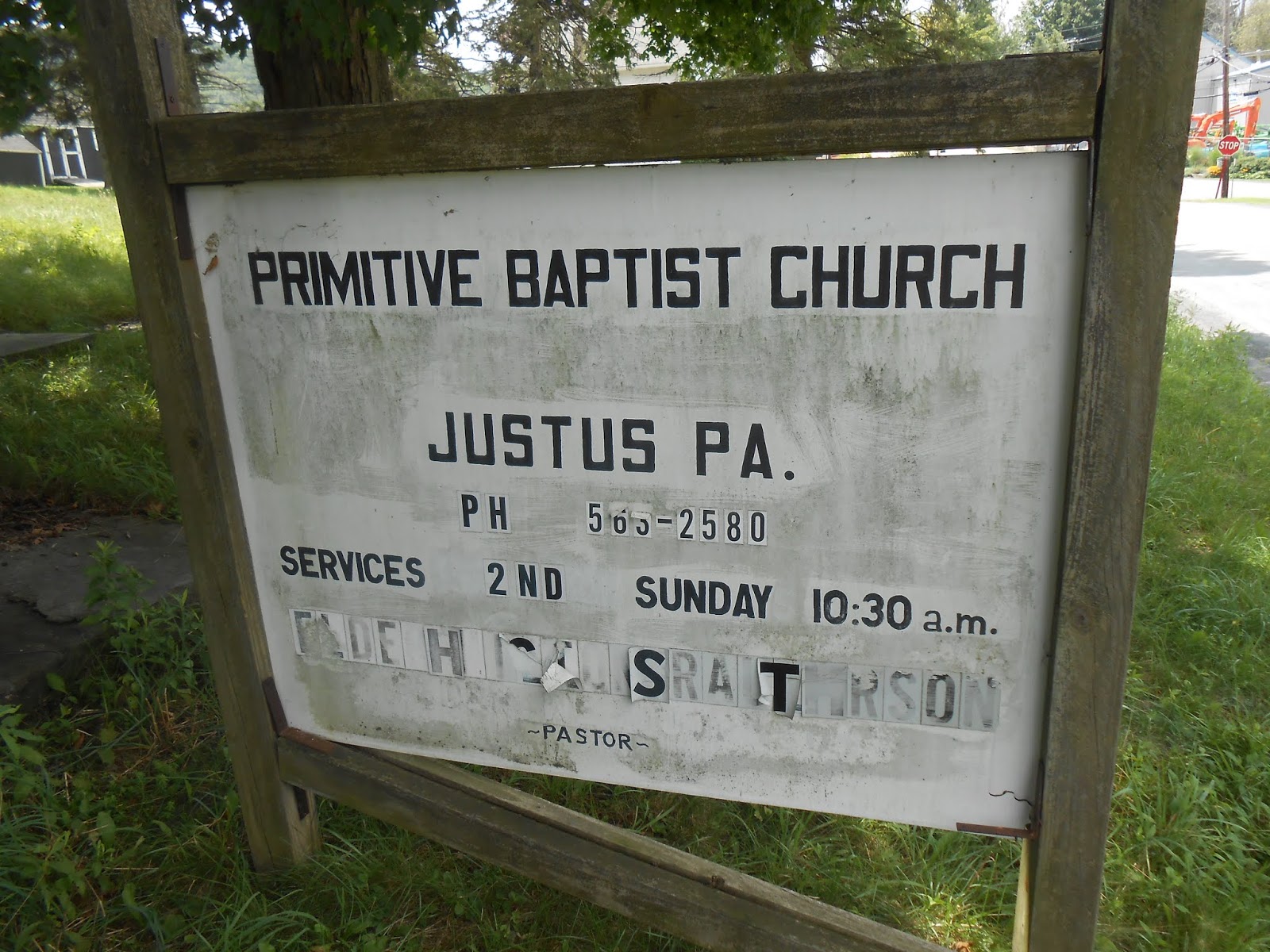
On Layton, near Justus Corners, is a lovely little church. Lovely might be a bit of hyperbole, although well-meaning in intent, for she has fallen into disrepair. 

Slatted shutters, some askew, all rotting, cover her windows against light and weather. Roaming critters might find easy access through a few hidey holes. Weeds encircle the structure, blossoming in the rain gutters and climbing some walls to engulf her. Large field stones beside the front steps have hiccupped out of place with the long winters. The white exterior has turned to dirty gray. The front door lock is the only shiny new part of her wardrobe, but even this slide bolt couldn't hold off looters as a limp kick might cause its collapse. 

Worst of all is the roof. The shingles jut and curl, disintegrate and rise, as if they would like to take
flight. But the ultimate slap in her face and her final humiliation are the holes in her roof, gaping and completing her progressive disintegration. A large pine tree landed on her in a storm last year. She stands hurt and forlorn, taking on rain and snow. But even in her aloneness, she sits humbly, waiting to welcome someone within her walls.

She is the Primitive Baptist Church of Justus, organized in 1835. Evidently, there are still a few members: 3, according to one of the families who once belonged. They no longer meet on Sundays, or any day for that matter. The bolt lock stays secure. Her simplicity and stature veil memories of covered dishes, picnics on the lawn, hymn sings, weddings, community friends, and a vibrant family life.

The one-room school house across the street, in use at the same time as the church beginning in the mid-nineteenth century, was demolished just this year. Perhaps the fate of the little church is sealed, for she stands still and alone, one of the last vestiges of our village life in Justus. The older generation dies, the younger moves to Houston or Memphis, and the voices of happiness and love that once filled the place are muffled and finally silenced.

I like to give the little church a good look every time I drive by or a nod or a thought about her days of singing and joy. She enjoys the recognition. Good to know she hasn't been forgotten.

Although it's only a quarter mile down the road from my home, it wasn't the church I grew up in. We weren't Primitive Baptists. Our church, a half mile in the opposite direction on Layton, was "American" Baptist ... whatever that meant and whatever the differences were between the two churches, I couldn't tell you. But some of my best friends went to the Primitive Baptist, and they were sterling family people. This little church bred them well.

Why, ever, in this miniscule community, would we have two Baptist churches and no other denominations? I wonder if perhaps doctrine or theology or practice differed just enough between them in the mid 1800s to warrant two Baptist churches.

And that reminds me of the hole in the church. Could a difference in doctrine or practice be a hole? The hole in the roof of the Primitive Baptist is glaringly offensive, driving me metaphorically to the "hole" in today's greater Church. For some people, perhaps the "hole" in today's Christian Church began with differences in doctrine and theology. Perhaps the "hole" in Church for some people is what they consider to be the hypocrisy of those who attend or maybe it's what they consider to be the irrelevance of the church's message to the world in which they live. Or perhaps the "hole" in the Church for them is their opinion of church goers as judgemental or narrow. No doubt about it - the Church has "holes."

But, when it comes to holes, let's keep the focus: God.

God, the Creator, knows with whom and what He has to deal. He made us! He had a plan for us. He loves us in our messiness and divisions and hypocrisy and judgmentalism and humanness ... I mean, really, who else would? And the plan was for His own Son Jesus to take the punishment for all those things we do and have done that cause us to fall so short of His standards. I deserve no mercy, no grace, but God took that "hole" in my soul and did a miracle of healing ... with the blood of Jesus.

God, the Lover of our souls, the One who will never leave or forsake, the Forgiver, Accepter, Completer of our lives ... our HOLE HEALER.


Don't let the holes you see in the church keep you from God.

I am ...
Grateful for the reminder of a humble church on Layton 
with a hole in its roof.

To view a YouTube video of the beautiful interior of the Primitive Baptist Church in Justus during its heyday, please go to https://www.youtube.com/watch?v=ZeCgQUfHUFQ

Wednesday, August 16, 2017

Simple Joys

Some days overflow with simple joys. 

Mornings usually begin the same way here on Layton.

Pajamas askew, hair disheveled, slippers shuffling, I maneuver down the steps from the upstairs bedroom and head directly to the front window in the living room. The point is to open the curtains and get the big picture window view of what the world looks like on Layton today. Is the sun beaming? Is there fog on the mountain or rain in the valley? Will the state of the weather predict the course of the day?

Unfailingly, this is the routine. Throw open the curtains on the world's stage, breathe deeply, scope out the day's prospects, and pray for the courage and strength to see it through.

One day this week, my usual routine took a lovely turn. Pulling back the curtains didn't present me with only a view of Frankie's garage across the street. The day's opening curtain call proved as exciting as a Broadway musical in its first thrilling notes.


On the stage of my front lawn, stood a buck, his antlers held high, majestic and peaceful. Sensing my presence and staring back at me, he froze, and so did I. Our eyes met, but he remained motionless. I searched the area for the rest of his family. No other deer in sight, only this magnificent creature. Shortly, he grew bored with me, but he never ran. He stuck his head into the nearby vegetation for another bite of his morning meal, and then he strolled calmly away into the woods, leaving me breathless at the window.

How can a day not begin with gratefulness when it starts with such beauty?

Some days, God just keeps those simple joys flowing.

With the spectacle of a front yard buck on my mind, I went about my morning activity: coffee on, feed the cat, dress. But a steady buzzing drew my attention. Was one of the neighbors mowing already? Or was someone using their electric clippers to trim bushes? Was there something wrong in the basement? My directional hearing is not the best. The buzz seemed to encompass the house like a giant mosquito, and it was incessant. The sound drew me to the back porch where it became obvious the noise came from overhead.

Incredibly, an aerial circus claimed the skies. A small plane dove, twisted, and spun high above my house. I pulled up a yard chair in the driveway, and, head back, I enjoyed the show. The pilot was wild with enthusiasm. He'd climb straight up, turn with his nose to the earth, and spin down until I thought he would join me for morning coffee. Back up he rose to a horizontal flight pattern, and he spun like the Salt and Pepper ride my grandsons love at Knoebel's. What an acrobatic show, right here in my backyard on Layton!

God fills our lives daily with simple joys. Our heads may be full of worries and busyness that block our sight, but God asks us to change focus and "Give thanks in everything." He reminds us to live eyes and ears wide to the blessings around us and to give thanks for each one. No matter what difficulties and hardships we face, there are always things for which we can be thankful. Our lives abound with blessings, awaiting our recognition and appreciation.

The marvelous thing about thankfulness is that it opens the door to joy. Joy rushes in naturally right behind thanksgiving, and contentment with our life situations has its foot in the door.

Eyes and ears wide. Can you see many things for which you can give thanks? I'm working on making it a habit. Want to join me?

Enjoying plenty of Simple Joys here ... 
On Layton.


Friday, May 27, 2016

What can you learn in a school without computers, the core curriculum, and an anti-bullying policy?

What can someone learn in a school without computers, the core curriculum and an anti-bullying policy?

Plenty.

At least that was my conclusion as I considered the question recently. 2016 marks the fiftieth
anniversary of my high school graduation.

Really.

I can't believe it either.

The old gang is meeting on a monthly basis to prepare for a big 50th party this summer. So remembrances of our country school those five decades ago are being dragged out of memory mothballs, shaken out, and hung up to laugh about.

Our alma mater, Scott School, in the country hollow called Montdale was a one story,  rectangular building with a single hallway down its center, spilling off into classrooms on either side. In 1953 the class of '66 started kindergarten at one end of the building, and each year we worked our way up the hallway, classroom to classroom, until thirteen years later when we reached the other end of the building where an exit door marked the way into the great beyond.

We should have been overcome with fear and intimidation on June 6, 1966, when we left our school for the last time. After all, President Kennedy had been assassinated when we were in ninth grade. The Vietnam War broiled and escalated daily, and within a year or two a lottery draft would call more boys across the world. The South rumbled with civil rights marches, and in two years Dr. King would be shot. The '60s seethed anxiety, cultural change, and social upheaval, and we were stepping right into the thick of it. But in June, 1966, we were eighteen, cocooned, and clueless.
Scott High School, Class of 1966, 36 Graduates
Principal William Gilvary at the podium.
Chairman of the school board, John Ychkowski, awarding diplomas.

In the midst of a complex world of national and international turmoil,  our school was simple:

  • We didn't have computers, cell phones, printers, or video games. I guess most hadn't been invented. Our valued possession in '66 might have been our transistor radios. If you needed to call home, you had to ask Francis, the school secretary, to use the office phone. 
  •  We didn't have a cafeteria or a library. We took bag lunches every day and ate at our desks. The locker room was in the basement, and one classroom also hid in the scary down-under, accessible over boards laid on the basement's dirt floor.
  • We didn't have football, soccer, track, or cross country.
  • We didn't have well-paid teachers. When I started teaching in 1970, my starting salary was $7,000, so who knows what our teachers were paid in the '50s-60s.
  • We didn't have a science lab, but Miss Santacroce and Mr. Vail did their best with a few beakers and a flip chart of plants.
  • We didn't have new textbooks. In fact, the list of users on the inside front covers of our books extended back a decade or so. 
  • We didn't have creative teaching supplies and resources, like posters. 
  • What we lacked makes a dismal and negative list, but that's just part of the story. Despite the frugality and the "it was different in my day" attitude, none of the "didn't have's," none of the world tension, seemed to bother my classmates. In fact, the thirty-six of us were a happy bunch. After all ...

  • We had Donnie. A victim of polio, the scrourge of childhood in the '50s, Donnie had a large
    Donnie
    hump on his back that prevented him from standing straight. In fact, he couldn't stand on his own at all. He used crutches throughout our school years, dragging his deformed foot that was far beyond normal size. But he kept up with us in every activity, even our five day trip to Washington DC. He smiled continuously. The boys included him in every event, even as a stat keeper at basketball games. In all our school years I don't remember any teacher lecturing us on how to treat Donnie or reprimanding us for bullying him. He was our friend. The whole class showed up at the funeral when Donnie died the year after graduation, his entire life encompassed in that little country school. Donnie taught us that people in that big outside world would be different from us, but they were one with us.

  • We had Rosemarie. A newcomer to the school in tenth grade, Rosemarie quickly became my
    Rosemarie
    best friend. Although my classmates had been together
    for many years, they immediately included the new girl with her marvelous sense of humor and happy disposition. A foster child at Stillmeadow, a home for many foster children, Rosemarie didn't tell us the story of  her family or how she came to foster care. But even at the age of fifteen, she showed us how to make the best of things. Rosemarie left Scott for Penn State, main campus. From her we learned how to laugh in the face of adversity and how to work hard to reverse our futures.


  • We had Patti with her syrupy Southern accent. Her parents moved to
    Patti
    Pennsylvania from North Carolina to work at a local Bible camp. Patti carried her Bible to school every day. Every one in the class came from a church-going family, the Catholics attending Corpus Christi and the Protestants attending Mt. Bethel in Justus or the United Methodist church in Montdale. But Patti's commitment to Jesus missed us. She wasn't just an attender. She would read her Bible in study halls or at lunch. It would be about ten years after high school when I would begin a personal relationship with Jesus, a relationship which eluded me in high school, despite my upbringing. No one ever ridiculed Patti. She was part of our group. She earned our respect through her diligent academic work and her faithful love for God. She was rewarded as class valedictorian. From Patti we learned about commitment to God and the courage to live it in front of other people.

    • We had Evelyn and Billy. 
      Billy
      Their high school romance began early - about ninth grade. Neither
      Evelyn
      of them even looked at or dated any one else through school. Truly, their eyes were only for each other. A month after we graduated in July of '66, they were married. This summer they will celebrate both our 50th reunion and their 50th wedding anniversary. Many of us in the class faced divorce through the years, but Billy and Evelyn plodded on, fighting cancer, building a business, rearing three children. From Bill and Evelyn we learned the importance of faithfulness and commitment in relationships.

    Our class produced company owners, a nurse practioner, several teachers, sales managers, leaders in large area companies, a pastor, several professors, an academic doctor, an airline stewardess, hairdressers, bankers, a massage therapist, a bevy of marvelous mothers and fathers, and an entire class of responsible, hard-working people of character who raised families, paid taxes, and helped to form the backbone of America.

    In a recent letter Patti wrote to me, "Considering all the things we didn't have, I think we got a pretty good education. It surely isn't about how much money is spent or how much technology is available per student that determines the quality of education."

    In hindsight and from the vantage point of a Christian, I can see God's fingerprints all over our thirteen years in the Scott School. God blessed us in our early, formative years with friendships, adults who loved us, and a safe environment. God's special blessing to the class of '66 of a protected place to grow and loving relationships gave us a bedrock start on life. None of us fell through the cracks. His watchcare has followed us these fifty years whether we choose to acknowledge it or not. And now we get to look back on those blessings and give thanks.

    What can you learn in a school without computers, the core curriculum, and an anti-bullying policy?

    Plenty, my friends. Plenty.